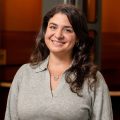
In 2013, after documentary filmmaker Mimi Chakarova watched “Fruitvale Station,” the fictionalized retelling of the events that led to Oscar Grant’s death, she emerged from the theater a bit rattled.
“I remember coming out of the theater and feeling upset and needing to decompress and grab a drink,” Chakarova said. “That’s when Randall West, the same firefighter I met a year before, walked into the same place I was. Randall said: ‘You want to do a documentary of unrecognized heroes? You’ve got to talk to Wellington. You’ve got to do a documentary about the kids who are in his program.’”
It has now been a dozen years since Chakarova met retired Alameda County Fire Department firefighter and founder of the Bay Area Youth EMT Program, Wellington Jackson. The organization, co-founded by Jackson in 2002, provides training, free of charge, by Black firefighters for 18- to 24-year-olds who have been involved in the juvenile justice system, providing them with the skills to become first responders as either emergency medical technicians (EMTs) or join a fire department as paramedic firefighters.
If you go
When: Mon., Sept. 22
Where: Grand Lake Theatre, 3200 Grand Ave., Oakland
Time: 6:30 p.m.
Benefits: Proceeds of the film go to the Bay EMT program.
Now, Wellington and alumni of the program are part of Chakarova’s new documentary “In The Red: Changing Lives to Save Lives.” The film, premiering at Grand Lake Theatre on Mon., Sept. 22, follows the trajectory of six youths of color, Joseph Stubbs, Dexter Harris, Justin Mayo, Julio Leon, Samantha Soto and Eric Lanier, who went through the fire academy training at Bay EMT.
The film, which wrapped filming in May 2024, shows how the lives of these young men were changed as they went through the fire academy training at Bay EMT. Some climbed the ranks and made strides within the fire department. For others, the ghosts of their past caught up to them.
“It’s not just a film about the triumphs, but also about the setbacks,” Chakarova said. “And that it’s not a linear trajectory.”
A character who strikes that balance, Chakarova believes, is Justin Mayo who grew up in North Richmond and San Pablo.
Mayo dreamed of playing football and when that dream didn’t come to fruition, he tried to find meaning by following his father’s footsteps and becoming a firefighter. Though he successfully graduated from the program — and even won an award for his athleticism — Mayo’s life goes down a different path.
“There is this beautiful thing about the passage of time. Like, if you really want to see someone change and really want to see if that change is genuine, you have to give it time,” Chakarova told Richmondside, noting that after a year of filming, she decided to follow their lives for 10 years.
Mayo’s plans were sidetracked by partying, but Chakarova said his growth is apparent nevertheless.
“I feel like Justin’s section is almost like a warning call for young folks who may be thinking ‘Man, I just like to party and live in the moment,’ but there are consequences to that,” the filmmaker said. “And I think Justin says it in a beautiful and really genuine way. He doesn’t really sugarcoat his words.”
“He always wanted to say the right thing at the right moment when he was in the academy, but he’s not trying to impress anyone anymore. And there is something really genuine and sincere in a person who’s willing to say, ‘Yeah, I screwed up, and I’m not where I want to be, but I’m just happy to be here, just happy to be alive,’ ” Chakarova continued.
The filmmaker said that it took a lot of convincing to get the go ahead for the film crew to follow the program and the people involved. The hesitation, she said, came from both Jackson and the young participants.
One particular challenge, Chakarova recalls, was gaining the trust of Dexter Harris, one of the young men featured in the film.
“It did take eight months of me meeting with him. I was able to film him with his friends. I was able to film him through the academy and even at his dad’s house,” Chakarova said. “But he did not let me go to his house until eight months in.”
The documentary doesn’t shy away from the trials and tribulations the young people go through, including the grueling training and the various obstacles they faced during the 11-year filming process.
The film is narrated by Joseph Stubbs, one of the young men in the program. Stubbs was first incarcerated at 16. He was locked up when firefighters from the program showed up with a “lifeline” for him to become a better person, he says in the film. Throughout the filming, Stubbs gets legal help, thanks to Jackson, to clear his record so he can get work as a first responder. But, as the years go by, Stubbs gets into trouble again.
“A lot of us come from broken homes, foster homes, whack ass homes. Most people give up on kids like us, label us,” Stubbs says in the film. “He ain’t nothing but a menace to society.”
Chakarova’s favorite scene in the film is when Stubbs is awarded a good samaritan award by the Oakland City Council and runs into the officer who used to arrest him as a teenager.
“The police officer doesn’t recognize Stubbs, but Stubbs knows exactly who he is,” Chakarova said. “It’s one of those serendipity moments. Like the moments where you think this only happens in fiction, right? Like this can’t happen in real life.”
While Jackson isn’t often seen on camera, his presence is felt throughout the film, as evidenced by the respect each youth shows towards him, the academy, and everything they are learning.
Jackson is a pivotal father figure for many of the young men featured in the documentary. When Stubbs gets into trouble, Jackson and Chakarova go visit him in prison and keep in touch after he is released and works to get his life together once again.
“When our students graduate, we tell them they’re family,” Jackson said. “We see each other on a pretty regular basis. Even through the pandemic, there wasn’t a time when we weren’t in contact with them.”
Jackson said that since 2019, enrollment and graduation rates for the program have decreased. Before 2019, 75% of the students in the EMT program were passing the class. Now, it is down to 65%.
Jackson says the applicants they are getting aren’t as academically prepared.
“So what’s happened post pandemic is people aren’t interested in healthcare in general,” Jackson said. “It’s the complete reversal from 9/11. Everybody wanted to be a firefighter, a paramedic, a nurse, or an EMT.”
Jackson said that when the program was at its highest enrollment, they had to cap applications at 60. Now, he said, they get anywhere between 25 and 30. Bay EMT offers two sessions per year with 20 trainees each.
Chakarova said one of the motivators of making this film was highlighting the life-changing program. The proceeds from the film screening in Oakland will go directly to Bay EMT. Many of the characters featured in the documentary will be in attendance and current Bay EMT students will be volunteering at the event.