Imagine you’re a baby crawling around the floor. What do your little baby hands feel on that journey? If you bump into a book, how will it shape the course of your life?
Well, research shows that if a baby grows up with 20 books in their home, they are more likely to succeed academically. In Richmond, one nonprofit is helping to make sure that happens by giving away free books to local children, aged 5 and younger.
The Berkeley Baby Book Project, a Berkeley-based nonprofit that expanded its reach to include parts of west Contra Costa County in 2022, wants children to have enough books so they enter kindergarten better prepared to read. Through the program, families in Richmond and San Pablo can receive a free personalized, age-appropriate book every month by mail, including bilingual books in Spanish and English.
How to get free books
WHAT: Richmond and San Pablo families with children under 5 can receive one free book a month
HOW: Enroll in-person by visiting participating community centers or local libraries.
WHERE: See complete list of participating places.
Richmond and San Pablo families can enroll in the program by visiting the participating community centers or local libraries. (See the full list of participating places.)
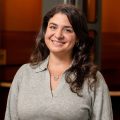
Executive director and founder Seena Hawley said she started the nonprofit because she believes investing in early education sets up children for academic success, citing a number of studies to support this.
“There is one data point — how many books are in the child’s home — and you can predict their kindergarten readiness,” Hawley said. “Those books need to be on the floor of the house, so when the babies are crawling around, they bump into them, and they come into consciousness as human beings as book owners.”
If children grow up with books in the home, they are more likely to have better vocabulary and communication skills, basic math skills such as counting, as well as sorting and naming shapes and colors, and cognitive skills such as the ability to focus on a task or hold a pencil. If they can do that by kindergarten, they are less likely to fall behind at any other point in their schooling, a number of studies prove.

How a school bus grew into a book project
Hawley is an elementary school teacher turned “magic school bus driver” who has expanded her route. Unlike Ms. Valerie Frizzle, who takes her students on thrilling scientific-adventures through the Magic School Bus book series, Hawley would take students on reading adventures.
For nearly a decade, she would fill her school buses in Berkeley with books that students could keep, as long as they agreed to answer her questions about what they read. It was a good way for her to donate her own children’s books while connecting with the students she drove daily. When she ran out of her own books, she bought second-hand books from local bookstores to meet the demand.

Hawley was getting her secondary teaching credential at the time. She realized there were a number of students who didn’t have books but wanted some and enjoyed reading them. She read studies about early education and book ownership, spoke to her students and connected to experts in the field, before realizing the biggest impact she could have as an educator was by intervening early. So she quit her teaching job, continued driving the bus and started her nonprofit in 2012.
Partnering with Dolly Parton’s Imagination Library
Hawley first started donating books in three South Berkeley neighborhoods where the need was the greatest. In 2015, she connected with Dolly Parton’s Imagination Library, a national nonprofit that mails books to children, allowing Hawley to expand her reach.
Hallie Anderson, the Community Engagement Coordinator for Dolly Parton’s Imagination Library of California, said the goal is to expand into all California counties — especially Contra Costa County, where there are about 63,000 children in the group’s target age range.
The partnership is fairly simple. Hawley fundraises to buy books and the Imagination Library handles the selection and distribution of books. If a child is registered at birth, they could have a total of 60 books by their fifth birthday.
“This program gets books straight into their home every single month that’s really at their level,” Anderson told Richmondside. “Board books for the little ones, and then as they age in the program, like around age three, (the books) become more flexible and have reading tips in the panels for the parents as well, activities, that kind of thing.”

In 2015, Hawley had 100 children signed up for free books. By 2024, her nonprofit was providing books to more than 2,000 children in Berkeley, Emeryville, Richmond and San Pablo.
Hawley said she decided to move her operations to Richmond to meet the particular needs of the city’s children.
“I skipped Albany and El Cerrito because I have very limited resources,” Hawley said. “So, I’m going to put them where they can do the most good.”
There are currently 885 children enrolled in the program in Richmond and San Pablo — many of whom have opted for the bilingual books.
According to a survey by the Berkeley Baby Book Project, 87% of parents have had more adult-child book-sharing time in their homes since book deliveries began, and 86% of children spend more time reading.
For Spanish speakers, 100% of all parents surveyed said they read more to their children, and that their children have been spending more time alone with books since the deliveries began.
“Enrolling in The BBBP has been magical for our family,” Richmond mom Nancy Marquez said. “We have two little ones, and each looks forward to receiving a special book just for them every month.”
Marquez said since she enrolled, she has read to her children more frequently and has watched them explore the books independently too. She is particularly grateful for the Spanish titles because it “brings books in our language into the hands of little ones.”

Marquez’s favorite book, Brick by Brick, (Ladrillo a Ladrillo), reminds her of her childhood. The story focuses on an immigrant family where the father, who worked in construction, encourages his young boy to study and love books.
“The book ended (with the) father building the family’s forever home and it brought me to tears to see this depicted in a way that I could share with my daughter,” Marquez said.
Another Richmond mom, Rubi Calderón, said receiving the books has sparked her son Jazeil’s interest in reading and allowed them to share beautiful moments as a family. She said she is particularly grateful for the program because it allows parents to feel supported in their children’s growth.
“Every time a new one arrives, he gets excited and wants us to read it together again and again. These moments have not only enriched his vocabulary and curiosity, but have also strengthened our bond as a family,” Calderón wrote in an email in Spanish. “It fills us with joy to see him so interested and happy as he discovers new stories.”

Why does giving books to children who can’t read yet matter?
According to a 2010 study by Mariah Evans, when families have more books at home, kindergartners start school with higher reading scores. It was a revolutionary study, Hawley said, because up until it was released, educators believed that a parent’s level of education, or their income, was the highest determinant of their children’s success.
“It was backwards. We looked back and blamed parents for their income, for their own education,” Hawley said. “But this study made us look at education proactively.”
Evan’s study, which followed more than 70,000 families from 27 different countries for 20 years, found that regardless of race, income, educational system or family stability, the biggest equalizer is books.
If young children had access to books and were being read to, they were more likely to be ready for kindergarten.
Children who enter kindergarten ready to learn are 82% more likely to master basic skills, compared with a 45% chance if the child isn’t ready for school, according to a 2015 study by the Bridgespan group.
Up to 70% of kindergarteners who struggle with reading will still be poor readers at the end of third grade, a 2019 study by The Ohio State University found.
A study, which followed more than 7,000 families from 27 different countries for 20 years, found that regardless of race, income, educational system or family stability, the biggest equalizer is books.
Investments in the first few years of a child’s life have the greatest return, researchers found, because from birth to the first day of kindergarten, a child’s brain develops more quickly and a greater amount than at any other time. In the first three years of a child’s life, 700 new connections between cells in the brain are formed each second.
For a city like Richmond, where families come from different countries and socioeconomic levels and speak different languages, books could be a unifier.
“Children coming in with the shared experience having read the same book,” Hawley said.
Richmond has book shortage; nonprofits help fill the gap
Robin Wilson, co-founder of the nonprofit West County Reads, said Richmond has historically had a shortage of books, so programs like these are especially important. (Many locals lamented the closure last year of the El Cerrito Barnes and Noble store.)
She said it’s not because people don’t value education, but because buying and reading books is often not a priority when parents are working several jobs to make ends meet.
“In my generation, it was traditional, you have dinner and then just before bedtime you have a bedtime story. Well, now, especially lower income families, the parents might not have the time to do that lovely bedtime ritual,” Wilson told Richmondside. “I don’t think that means the parents value it less. I think they just have (only) so much time and money to work with, and it gets squeezed out. So that’s why it’s really important for nonprofits to help so that the kids discover their love of books.”
Her west county literacy organization has distributed 498,685 free books to WCCUSD teachers, students, entire school populations and the public, for the last 25 years, until Stege Elementary — where her books were stored — was abruptly closed last year.
She started her nonprofit primarily because she was shocked by the lack of books in local classrooms. New teachers are responsible for building up their own classroom libraries, so West County Reads helps fill that gap by providing teachers with 50 books a year.
Since Stege closed, her books have been piled up in a district facility in the Marina Bay neighborhood. Wilson said she hasn’t found a permanent location for educators to come in and pick up books, so she is doing a pop-up book distribution for 80 teachers in August.
Educators want to expand operations for free books
Hawley believes the demand for books is high in Richmond. She said enrollment in her program numbers would double if she launched an online sign-up option, but she can’t do that without funding to meet the demand.
Hawley has applied for grants from the city of Richmond and a number of local nonprofits and philanthropists, but she would like to see Contra Costa County partner with Imagination Library to deliver books countywide, she said.
“Ultimately, my goal is to see the day there are county programs in every county in California,” Hawley said, noting that would be a success, even if it makes her nonprofit obsolete.
Want to get involved?
Imagination Library’s Hallie Anderson put out a call to the community: if anyone is interested in expanding Imagination Library’s operations in Contra Costa County, email her at handerson@ca.imaginationlibrary.com
She said now is the time because the state is matching 50% of the cost (through Senate Bill 1183) to deliver and buy books, so it’s cheaper to distribute books for nonprofits or local governments.