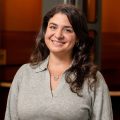
An AP Spanish Literature class at Kennedy High School that was unexpectedly cancelled, to the disappointment of students and teachers, was reinstated this week after more than a month of lobbying by supporters.
But the result is bittersweet for teacher Patricia Blanco.
“I’m totally happy. It’s a great achievement for us and for justice because we really needed the class at Kennedy,” Blanco said. “But I’m also sad because the administrators who are supposed to support us, and especially support the students, did everything that was in their hands to block this.”
At the beginning of the school year, high school administrators cut three Advanced Placement courses (AP Spanish Literature and Culture, AP English Literature and AP Calculus), bringing the total number of advanced placement classes offered to five — the lowest in the West Contra Costa Unified School District.
The AP English Literature class was not reinstated, though the teacher previously told Richmondside she is willing to teach it. AP Calculus was cut because there is a vacancy in the high school’s math department.
Advanced placement classes are college-level courses offered in high schools nationwide that challenge students with rigorous, in-depth coursework. The classes prove a student’s college-readiness, boost GPAs and allow students to earn college credit if they pass a standardized AP exam at the end of the class (allowing them to bypass taking certain introductory college classes).
The cuts surprised the school community. Blanco said administrators initially gave her a number of reasons: There weren’t enough students interested or some of the students no longer attended Kennedy. When she tried to discuss it with them, she said they didn’t respond.
But because there were at least a dozen students who still wanted to take the course — and a lot of work went into creating the curriculum — Blanco and her colleague Cristina Huerta tried every avenue to get it reinstated. At the very least, they wanted to understand why it was cut.
While those answers never came, the Spanish teachers said, after they gathered more than 100 signatures on a petition and reached out to the district, the class was restored.
“I can’t believe it finally happened,” said Huerta, who has taught Spanish for 13 years at Kennedy High. “I’m feeling a lot of emotions but at the top of the list is definitely joy. It’s wonderful to see that we were able to accomplish this together.”
Huerta speculated the administration reversed the decision after being pressured by the school district, community backlash online, or even her and Blanco’s emails.
“As long as I didn’t hear, ‘No, this is not going to happen,’ I was going to keep trying,” Huerta said.
After publication, Superintendent Cheryl Cotton said she was excited the class was reinstated.
“We value our students, staff, and families, and will continue to work to provide opportunities that challenge learners academically and allow them to earn early college credit,” Cotton told Richmondside via email.
She noted that Kennedy was allotted three additional positions through the district’s Local Control Accountability Plan (LCAP) to support higher-level courses at that campus.
“Beyond AP classes, we also have dual enrollment opportunities with Contra Costa College, allowing students at Kennedy and every other comprehensive high school in the district to earn college credit during the school day,” Cotton continued. “With these efforts, we are maintaining essential programs and expanding early college credit opportunities for all WCCUSD students.”

It’s not a perfect solution, however. The AP Spanish Literature class is considered the hardest language course offered districtwide, Blanco said. Students have to read multiple books, poems and other texts from across different time periods and countries, so there is a lot to analyze. With six weeks already passed, students have a lot to catch up on.
The other problem is that the class now conflicts with the only other AP class for seniors, AP Government.
This means students, such as Senior Elias Avalos, who are trying to take as many AP classes as possible for college applications, have to choose between the two.
“It’s a little frustrating,” Avalos told Richmondside, his voice heavier.
Avalos was among the students advocating to restore the class. He went to school board meetings, met with West Contra Costa Unified School District Superintendent Cheryl Cotton and checked in with his teachers and counselors almost daily hoping to hear good news.

He said the administration knew how important this class was to him, so the schedule conflict makes him feel a bit disregarded.
“It does sting and it does hurt a little because pitting the two senior AP classes against each other (doesn’t make sense),” Avalos said. “It feels a little targeted. It probably wasn’t but it’s like well, this is really annoying for me.”
Avalos said both his AP Government teacher and Blanco have said that they are willing to work with him after hours to help him prepare for the AP exams given in May, even if he can’t take the government class. (Students who do well on the AP exams can be eligible to receive college credit.)
“I personally feel like I have a responsibility to take the (Spanish) class, because all the work that I put in trying to get it back will mean absolutely nothing if I don’t take it,” Avalos said. “I don’t want to let the chance of me taking this class just go away.”
The advocacy continues for better academic opportunities
Blanco said the scheduling issue was one that could’ve been avoided, especially if teachers were looped into the decision. Blanco and Huerta found out the class was reinstated through an email on Sept. 22.
“It was very matter of fact,” Huerta said, noting there was no explanation or congratulations expressed. “(The email) said: ‘Good afternoon. We’re moving forward with opening the AP, Spanish lit class. Counselors are evaluating which period class will be held based on each student’s needs. Here’s a list of students we have. We anticipate the process will be complete by Wednesday.’”
She said the administration should have offered AP Spanish Literature during the first period so it wouldn’t conflict with the other AP courses.

“I sent them (the administration) an email to see if they can change it because of (Avalos’) situation, but they didn’t answer,” Blanco said, noting that she doesn’t expect anything to change at this point.
Kennedy’s High School Administrators did not respond to Richmondside’s multiple requests for comment.
Huerta said the teachers who currently teach or have taught AP classes want to create a plan so that these conflicts don’t occur next year.
And Avalos, who interns at the RYSE Center, said he wants to keep fighting to bring more resources to Kennedy High School. He said this may mean having more AP courses, programs like a law pathway program (which other high schools such as De Anza have), or working to ensure that classes are taught by fulltime teachers instead of a revolving door of substitutes.

He said his advocacy has proven that raising awareness and speaking out can lead to change. Last year students walked out to preserve the different career pathway programs that were at risk of being cut.
“There’s an obvious favoritism and investment into other schools. It’s clear. It’s on paper,” Avalos said. “But we’re in the same district, so why should it matter if one school is in a suburban, mostly Asian or white environment, compared to the school that’s like, mostly mixed with Brown and Black students?”
“But there’s definitely, I feel, a change being made. I feel that things are going to happen,” he continued, noting there are many students and teachers who stand beside him. “The necessities of the youth, necessities of our education or our teachers will be made. We will be heard … we have the power.”